Ficus Elastica Care: Watering, Leaf Drop & Indoor Growth
- Home
- Indoor Plants
- Ficus Elastica
- Rubber Plant / Rubber Tree
Evergreen Tropical Fig Tree
Care + Buying Guide
Ficus Elastica Care
Ficus Elastica Care works best when the plant gets bright, stable light, warm temperatures, and a root zone that is allowed to dry slightly between thorough waterings. The rubber plant prefers bright indirect light but can adapt to somewhat lower light, especially solid-green cultivars. Water when the upper 1–2 inches of potting mix feel dry, then soak the soil fully and empty any collected drainage water. Keep indoor temperatures around 60–80°F, avoid sudden cold drafts below about 55°F, and use a well-drained houseplant mix in a pot with drainage holes. Rubber plants dislike frequent relocation, so choose a good position and let the plant acclimate. Regular leaf cleaning, careful pruning, and moderate spring-and-summer feeding help maintain glossy foliage and a strong, upright indoor form.
FICUS ELASTICA
🌿 Large Glossy Leaves
🌳 Upright Tree Form
☀️ Bright Indirect Light
✂️ Responds Well to Pruning

Care Guide
About Ficus Elastica
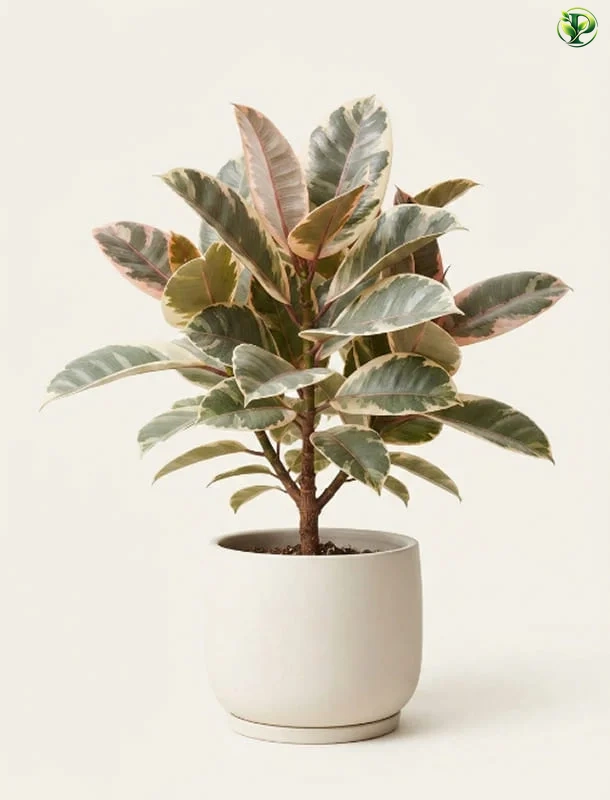
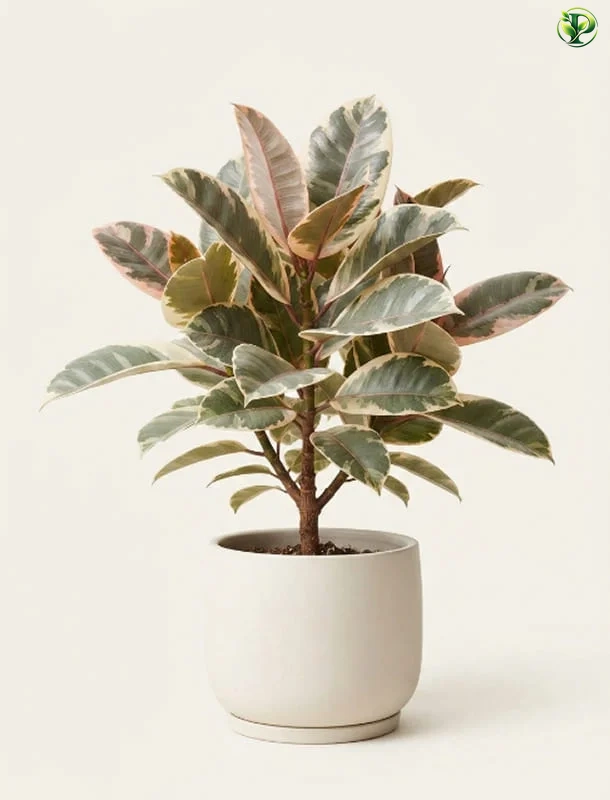
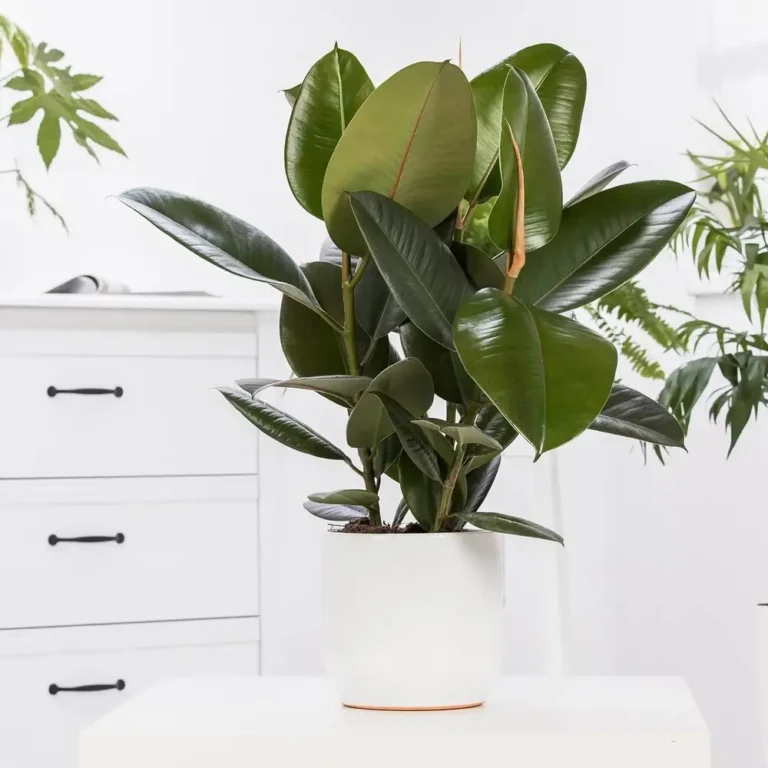
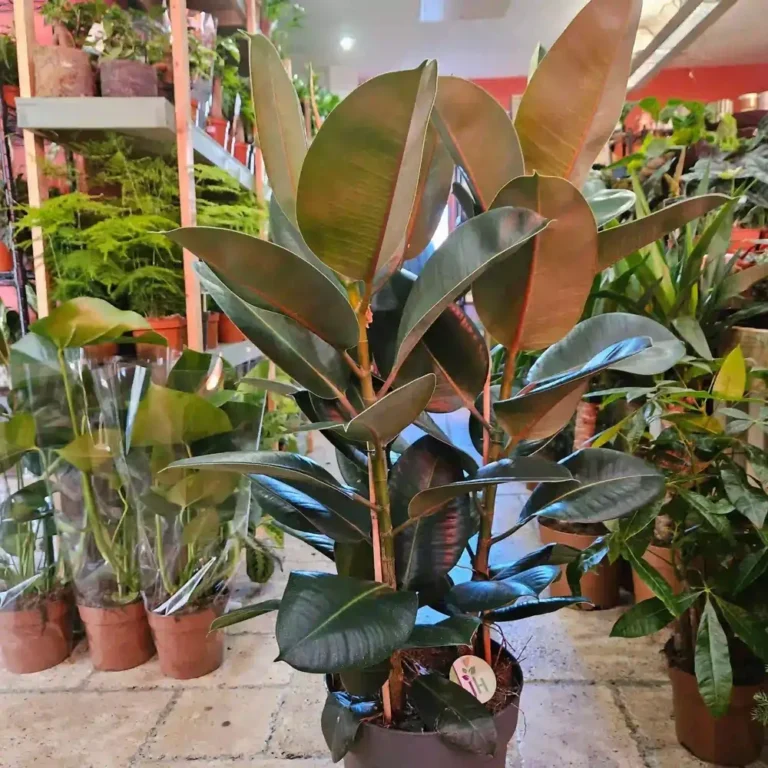
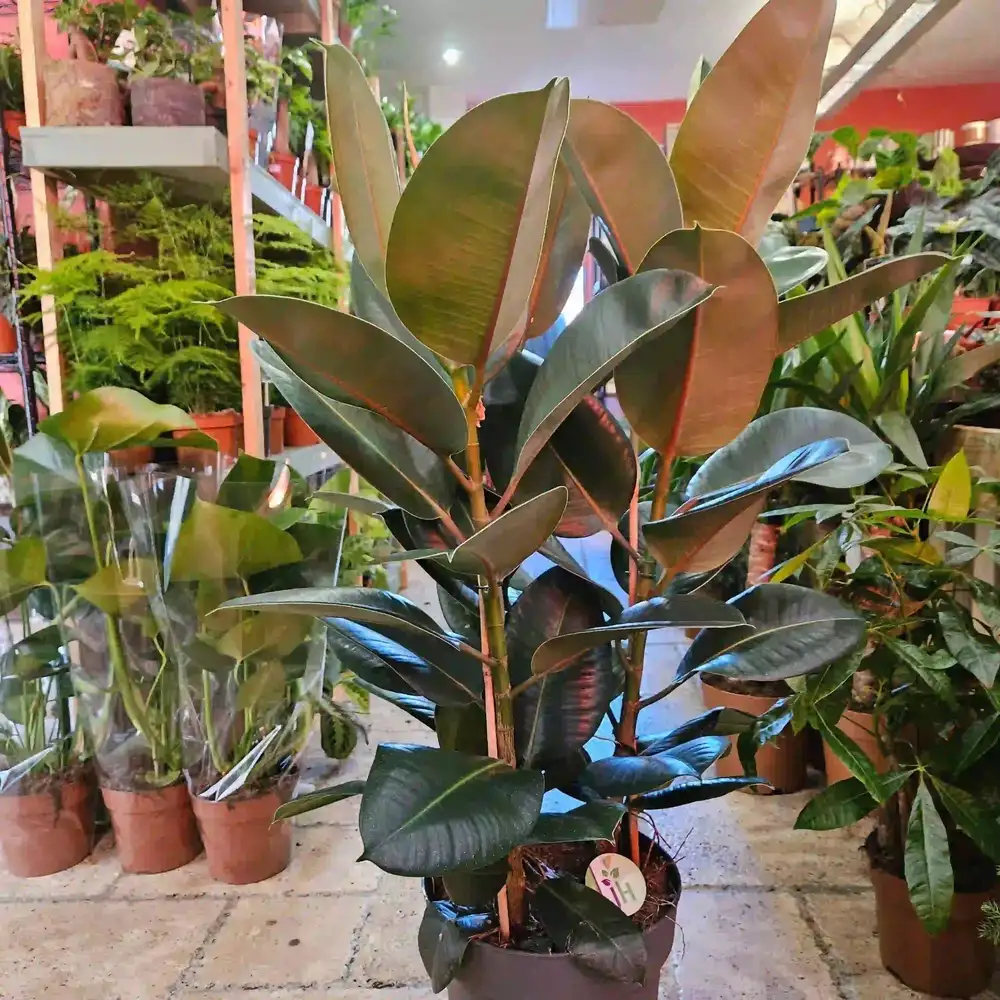
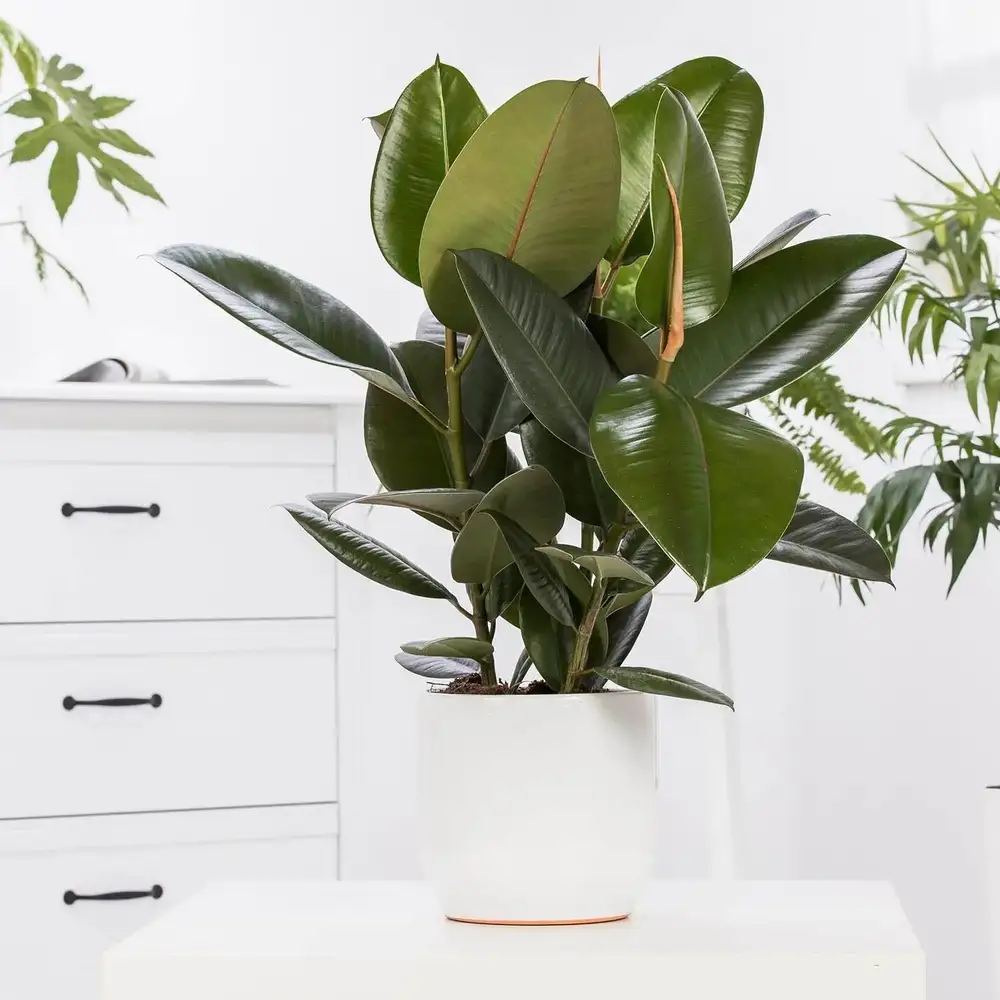
Ficus elastica, commonly called rubber plant, rubber tree, or Indian rubber plant, is an evergreen member of the mulberry family (Moraceae). In its native tropical range it can become a massive tree with aerial roots, but indoors it is usually maintained at about 2–10 feet through container culture and pruning. Its broad, leathery leaves are the main attraction, and modern cultivars range from deep green and burgundy to cream-, yellow-, white-, and pink-variegated forms.
For U.S. indoor plant collections, successful Ficus Elastica Care depends more on stability than constant attention. The plant prefers bright indirect light, a well-drained potting mix, moderate humidity, and thorough watering followed by partial drying. It can tolerate ordinary household air, but cold drafts, sudden moves, and chronically wet soil often trigger leaf drop. Popular cultivars such as ‘Robusta’, ‘Burgundy’, ‘Tineke’, ‘Ruby’, and ‘Tricolor’ share the same basic needs, though heavily variegated forms generally require brighter light to maintain strong growth and color.
Plant Information
Difficulty
Easy to Moderate
Light
Bright Indirect; Adapts to Lower Light
Water
Dry Top 1–2 in. Before Watering
Humidity
Average Home Humidity; 40–60%+ Ideal
Temperature
60–80°F (16–27°C)
Growth Rate
Moderate to Fast in Bright Light
Pet Friendly
No
Indoor Height
2–10 ft; Prunable
Repotting
Every 1–2 Years or When Rootbound
Native Range
Nepal to W. Yunnan & W. Malesia
History of Ficus Elastica
Ficus elastica was formally published in 1819 and remains an accepted species in the genus Ficus. Its native range extends from Nepal through parts of southern China and mainland Southeast Asia to western Malesia. The species grows naturally as a large wet-tropical tree and produces the milky latex typical of many members of the fig family.
That latex explains the familiar “rubber plant” name. During the late eighteenth and nineteenth centuries, Ficus elastica was cultivated and tapped as one of several sources of natural rubber in tropical Asia. It later lost commercial importance when Hevea brasiliensis, the Pará rubber tree, proved better suited to large-scale rubber production.
Its ornamental value lasted. Large glossy leaves, upright growth, and tolerance of indoor conditions made the species popular in conservatories and later in homes and offices. Modern nursery selection expanded the range further with dark-leaved, compact, and variegated cultivars. Today, U.S. growers value it mainly as a durable foliage plant rather than as a source of latex.
Plant Specifications
Botanical Name
Ficus elastica Roxb. ex Hornem.
Family
Moraceae
Plant Type
Broadleaf Evergreen Tree / Houseplant
Growth Habit
Upright, Woody, Tree-Forming
Indoor Height
2–10 ft Commonly; Larger if Unpruned
Light Requirement
Bright Indirect to Partial Shade
Watering
Water After Top 1–2 in. Dry
Humidity
Average Home Levels; 40–60%+ Ideal
Temperature
60–80°F; Avoid Below ~55°F
Soil
Well-Drained Houseplant Mix
USDA Hardiness
Zones 9a–12b Outdoors
Repotting
Every 1–2 Years or When Rootbound
Pet Safety
Sap / Plant Material Can Irritate Pets
Native Range
Nepal to W. Yunnan & W. Malesia
Ficus Elastica Care Guide
Rubber plants are forgiving when their environment stays consistent. Prioritize strong filtered light, controlled watering, good drainage, and protection from sudden cold or frequent relocation.
Light & Placement
Place the plant in bright indirect light, ideally near an east window or a few feet back from a bright south or west exposure. Solid-green forms tolerate lower light better than highly variegated cultivars.
Rotate the pot occasionally for even growth, but avoid repeatedly moving the plant between very different light levels. Sudden relocation can trigger leaf drop while the plant acclimates.
Watering & Drainage
Water thoroughly when the top 1–2 inches of potting mix are dry, then let excess water drain completely. Empty saucers or cachepots after watering.
Yellow lower leaves and soft, wet soil often point to overwatering. Very dry mix, drooping leaves, and crisp margins can signal that the plant has stayed dry too long.
Soil & Repotting
Use a well-drained houseplant mix amended with perlite, pumice, or bark if needed. The mix should hold some moisture while still allowing air to reach the roots.
Repot in late winter or spring when roots are tightly circling the pot or drainage has slowed. Increase container size gradually rather than moving a small root system into a very large volume of wet soil.
Temperature & Humidity
Rubber plants grow well around 60–80°F. Avoid temperatures below roughly 55°F, cold window glass, exterior-door drafts, and strong air-conditioning.
Average home humidity is usually acceptable, but very dry winter air can increase brown edges and spider-mite risk. Keep leaves clean and use a room humidifier if conditions become extremely dry.
Fertilizer & Leaf Cleaning
Feed during active spring and summer growth with a balanced houseplant fertilizer at label strength or a modest dilution. Reduce feeding when growth slows in fall and winter.
Wipe the large leaves with a damp soft cloth to remove dust. Clean foliage captures light more efficiently and makes it easier to spot scale, mites, or mealybugs early.
Pruning, Branching & Propagation
Prune in spring if the plant becomes too tall or lanky. Cutting the main stem above a node can encourage branching below the cut, creating a fuller shape.
Wear gloves because the milky latex can irritate skin. Rubber plants can be propagated from stem or tip cuttings and by air layering; air layering is especially useful for tall, woody specimens.
Common Ficus Elastica Problems
Most rubber plant problems come from excess moisture, sudden environmental changes, low light, cold drafts, or common houseplant pests. Match the symptom to the root cause before changing several care factors at once.
Yellow Leaves & Wet Soil
Yellowing lower leaves combined with persistently damp soil commonly indicates overwatering or poor drainage. Let the mix dry more between waterings and make sure the pot drains freely.
Sudden Leaf Drop
Rubber plants may drop leaves after a sudden move, temperature change, cold draft, or major change in light. Keep conditions stable and allow time for acclimation instead of moving the plant repeatedly.
Brown Spots or Crispy Edges
Brown edges can follow dry air or inconsistent watering, while dark soft spots may indicate prolonged wetness. Direct sun can also scorch leaves, especially on pale variegated sections.
Leggy or One-Sided Growth
Long internodes and a leaning stem usually point to insufficient or uneven light. Increase filtered light gradually, rotate the pot, and prune in spring if you want a bushier plant.
Curling or Drooping Leaves
Leaves can curl or droop from underwatering, root stress, cold exposure, or a sudden environmental shift. Check soil moisture and recent changes before assuming the plant needs more water.
Scale, Mealybugs & Spider Mites
Inspect leaf undersides, stems, and petioles for scale bumps, cottony mealybugs, stippling, or fine webbing. Isolate affected plants, clean foliage, and treat with an appropriate labeled control.
How to Choose a Healthy Ficus Elastica
When buying a rubber plant, choose a specimen with firm upright stems, glossy leaves, and active growth rather than one with widespread yellowing or recent heavy leaf drop. Check the newest leaves for clean expansion and look along petioles and stems for scale, mealybugs, and spider-mite damage.
Match the cultivar to your light. Solid-green forms such as ‘Robusta’ and dark cultivars such as ‘Burgundy’ are generally more forgiving in moderate indoor light, while variegated selections such as ‘Tineke’, ‘Ruby’, and ‘Tricolor’ perform best in brighter filtered conditions. Avoid plants sitting in saturated soil or decorative pots with no drainage path.
Also consider mature size before purchase. Ficus elastica can become a substantial floor plant, so choose a healthy single-stem plant for a taller tree form or a multi-stem specimen if you prefer a fuller appearance. Stable placement after purchase will reduce transplant and relocation stress.
Buying Checklist
Healthy Glossy Leaves
Choose firm, clean foliage without widespread yellowing, soft black areas, or excessive recent leaf loss.
Strong Stem Structure
Look for sturdy stems, a stable base, and active buds or new growth rather than weak, sharply leaning, or damaged canes.
Pest-Free Growth
Inspect stems and leaf undersides for scale, mealybugs, spider-mite stippling, webbing, or sticky residue.
Draining Root Zone
Prefer a plant in a container with drainage holes and a mix that is moist but not waterlogged or sour-smelling.
Right Cultivar for Your Light
Choose solid-green or dark cultivars for moderate light and brighter positions for cream-, pink-, or white-variegated forms.
Frequently Asked Questions
Water when the top 1–2 inches of potting mix are dry, then soak thoroughly and drain excess water. The interval changes with season, light, pot size, temperature, and root density.
Leaf drop often follows overwatering, cold drafts, temperature changes, low light, or moving the plant to a very different environment. Check recent changes first and keep conditions stable while it acclimates.
No. Bright indirect light is ideal. Some gentle morning sun is usually tolerated, but strong afternoon sun can scorch leaves, particularly on variegated cultivars.
Pruning the main stem above a node during active growth can encourage buds below the cut to develop into side branches. Strong light also helps the new branches grow compactly.
Possible causes include dry soil, overly wet roots, cold exposure, low humidity, or a recent environmental change. Check soil moisture and temperature before adjusting the watering schedule.
It can grow outdoors year-round in frost-free climates, with NC State listing USDA Zones 9a–12b. In colder regions, use it as a houseplant or move containers outdoors only after nights are reliably warm.
No. The milky latex and plant material can irritate the mouth, skin, and digestive tract. Keep the plant away from pets that chew foliage and wear gloves when pruning if your skin is sensitive.
Related Plants
Explore Similar Indoor Foliage Plants
Bird of Paradise

Croton

Dracaena