ZZ Plant Care Guide with Detail & Buying Tips
- Home
- Indoor Plants
- ZZ Plant
- Low-Maintenance Houseplant
Rhizomatous Evergreen Perennial
Care + Buying Guide
ZZ Plant Care
ZZ Plant (Zamioculcas zamiifolia) is one of the most forgiving indoor plants for U.S. homes and offices. Its glossy leaflets grow from thick, water-storing rhizomes that help the plant tolerate dry periods and irregular watering. Bright indirect light supports the best growth, but ZZ Plant can also handle low-light interiors and fluorescent office lighting. Allow the potting mix to dry between waterings, use a container with good drainage, and avoid keeping the roots constantly wet. Warm indoor temperatures, average household humidity, and light feeding are usually enough to keep this slow-growing houseplant healthy. See the full ZZ Plant care guide, common problems, and buying tips below.
FAMOUS PLANT
🌿 Glossy Evergreen Foliage
☀️ Low to Bright Indirect Light
🪴 Beginner Friendly
💧 Drought Tolerant

Care Guide
About ZZ Plant
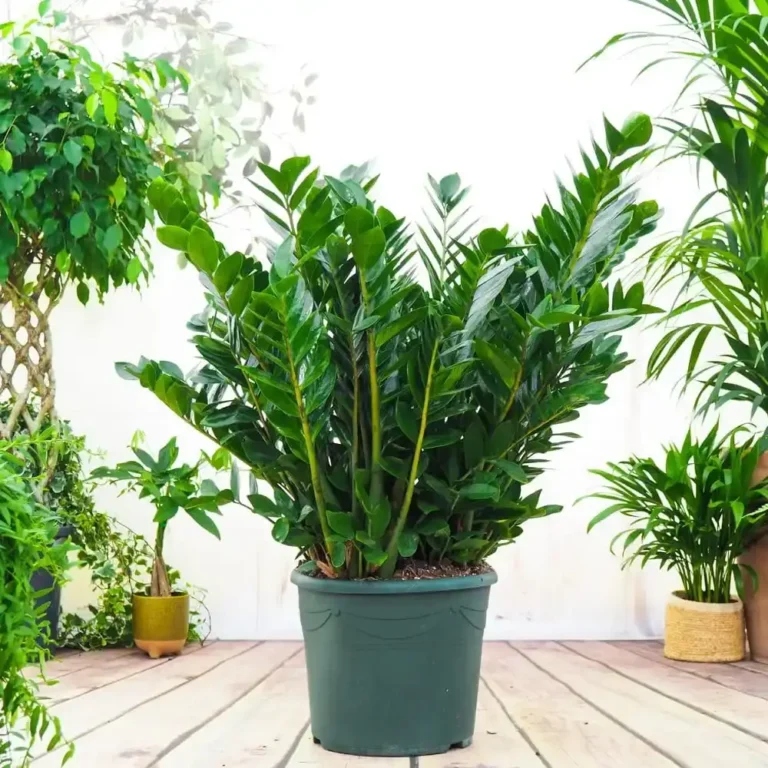
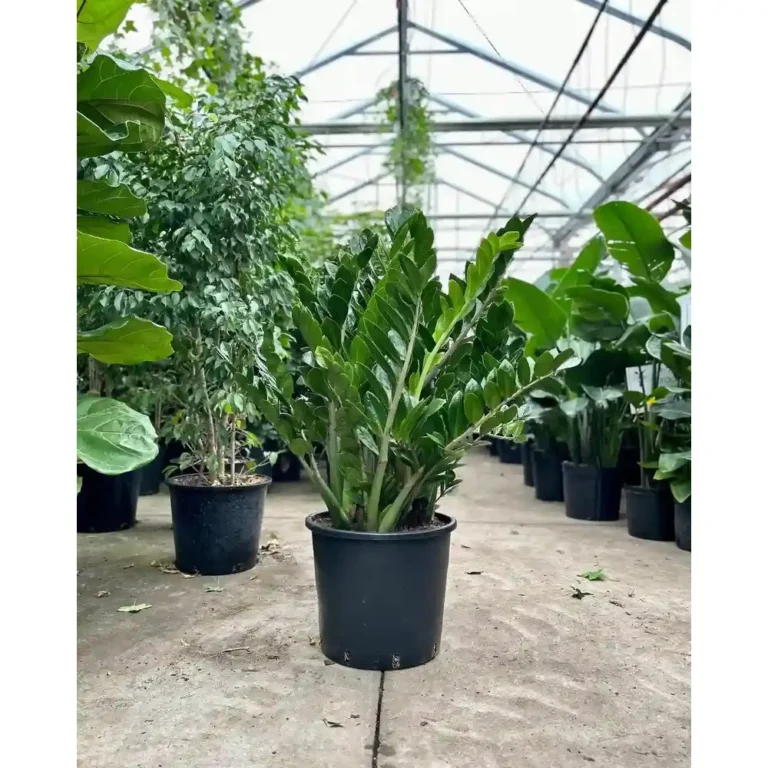
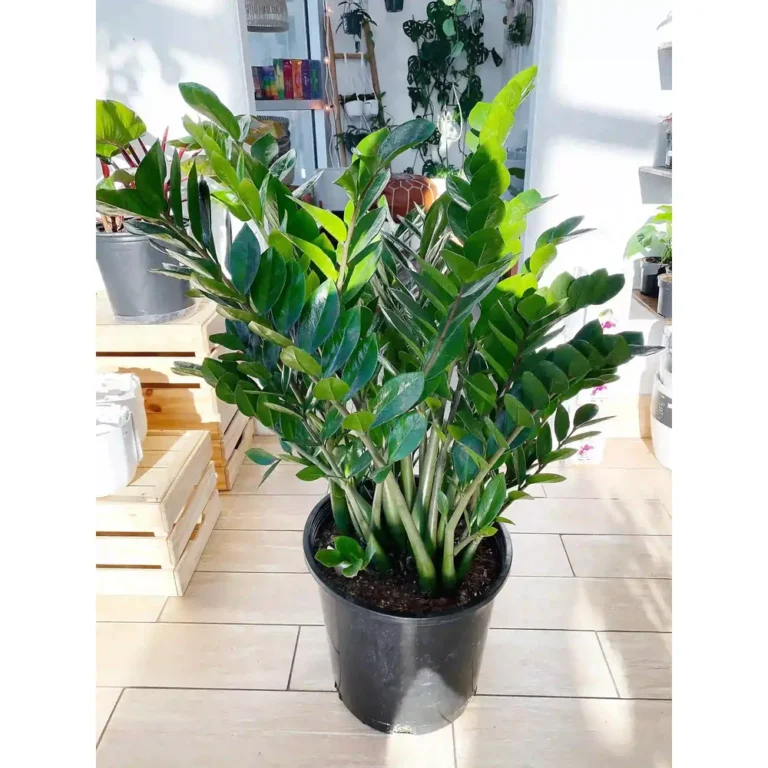
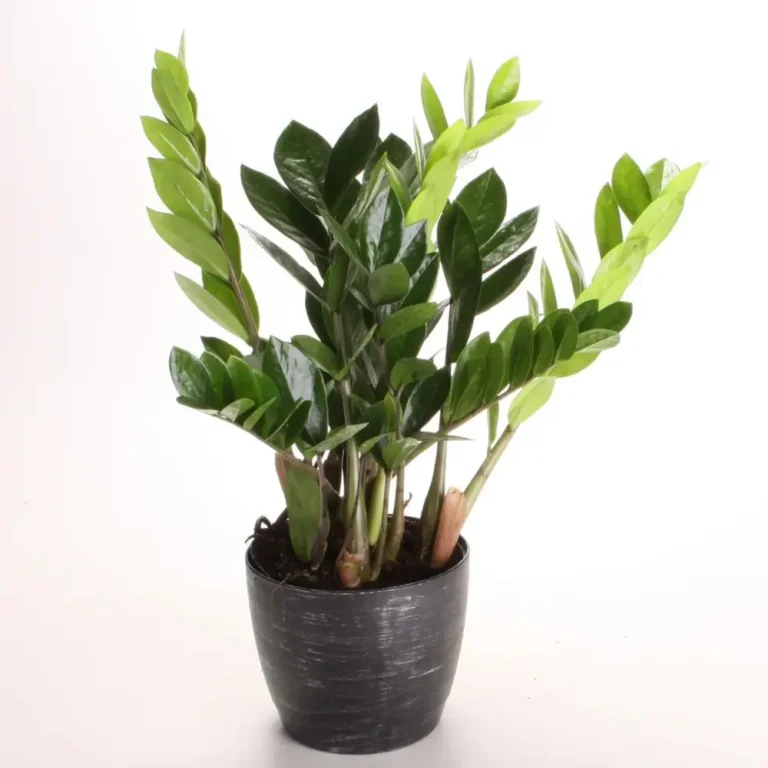
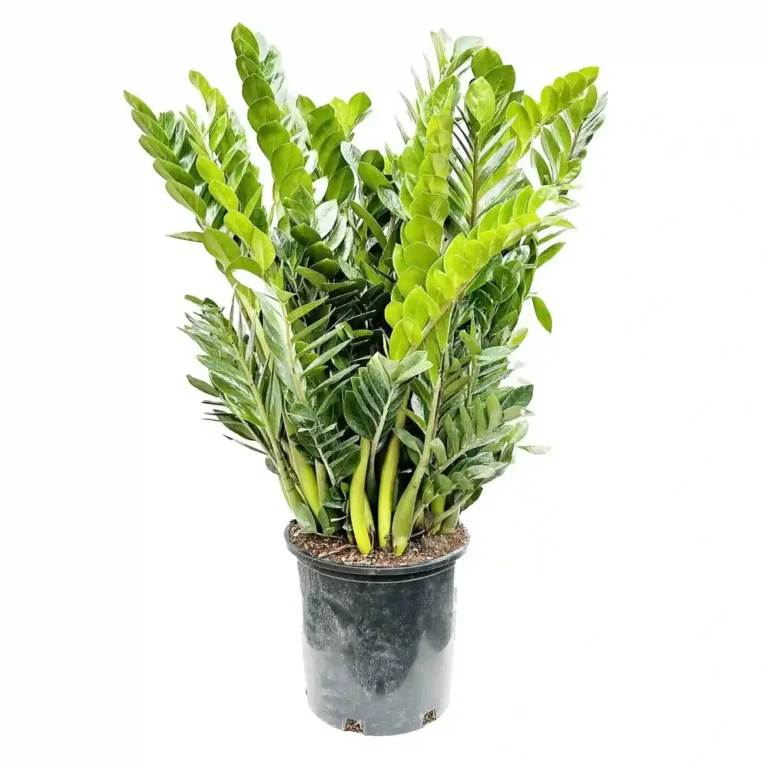
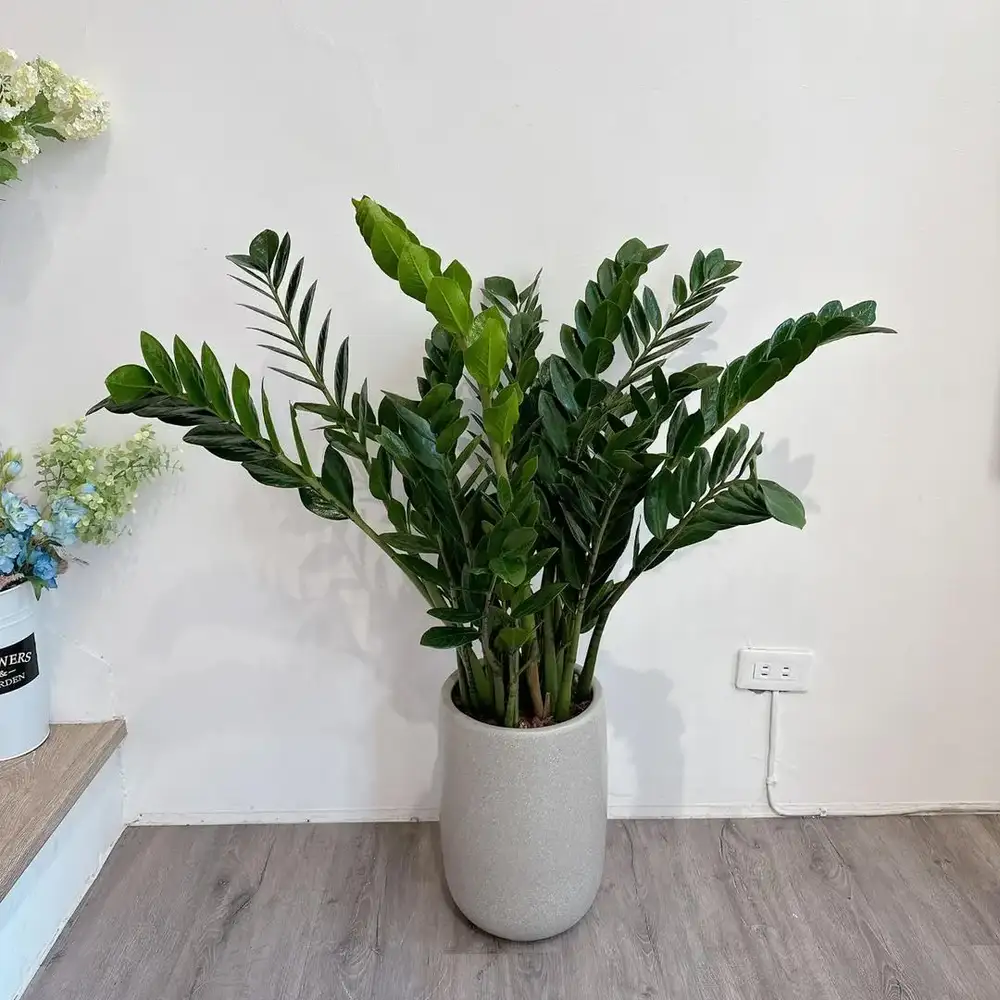
ZZ Plant (Zamioculcas zamiifolia) is a rhizomatous evergreen herbaceous perennial in the Araceae family. It grows from thick underground rhizomes that store water and produce upright, fleshy petioles lined with smooth, glossy, dark green leaflets. Mature indoor plants typically form dense clumps with an architectural, polished appearance.
The species is native from Kenya south to KwaZulu-Natal and also occurs naturally in Malawi, Mozambique, Tanzania, and Zimbabwe. In its native range it grows in seasonally dry tropical habitats, including shaded forest floors, woodland, grassland, thicket, and rocky sites. Its water-storing rhizomes and leathery foliage help explain the plant’s strong drought tolerance.
ZZ Plant can occasionally produce a low, aroid-style inflorescence consisting of a spadix surrounded by a greenish spathe, although flowering is uncommon in typical indoor conditions. In the United States it is especially popular in apartments, offices, commercial interiors, and low-light rooms because it combines attractive foliage with very low maintenance.
Plant Information
Difficulty
Easy
Light
Low to Bright Indirect Light
Water
Allow Soil to Dry Between Waterings
Humidity
Average Household Humidity
Temperature
65–90°F; Protect Below 50°F
Growth Rate
Slow
Pet Friendly
No
Indoor Height
2–4 ft Typical
Repotting
Every 2–3 Years or When Crowded
Native Range
Kenya to KwaZulu-Natal
History of ZZ Plant
ZZ Plant has a botanical record dating to the nineteenth century. The plant was first published in 1829 under the name Caladium zamiifolium by George Loddiges. Its foliage was noted for resembling plants in the unrelated cycad genus Zamia, a resemblance that is still reflected in the species name zamiifolia.
The genus Zamioculcas was established by Heinrich Wilhelm Schott in 1856. The currently accepted combination, Zamioculcas zamiifolia (G.Lodd.) Engl., was published by botanist Adolf Engler in 1905. Kew currently recognizes it as the only accepted species in the genus Zamioculcas.
For much of its botanical history the species was better known to specialists than to mainstream houseplant buyers. Its commercial profile increased as tropical foliage growers recognized its ability to tolerate low interior light, drought, and relatively few pest or disease problems. In the United States, the Florida Nursery, Growers and Landscape Association selected ZZ as a Florida Plant of the Year in 2002, helping reinforce its value as an interiorscape plant.
Today, ZZ Plant is widely sold across the United States for homes and offices. Newer cultivated forms, including dark-leaved Raven types and compact selections, have expanded the plant’s popularity while the classic glossy green form remains a standard low-maintenance houseplant.
Plant Specifications
Botanical Name
Zamioculcas zamiifolia (G.Lodd.) Engl.
Family
Araceae
Plant Type
Rhizomatous Evergreen Herbaceous Perennial
Growth Habit
Erect, Arching, Clump-Forming
Indoor Height
2–4 ft Typical Indoors
Light Requirement
Low to Bright Indirect Light
Watering
Allow Soil to Dry Between Waterings
Humidity
Average Household Humidity
Temperature
65–90°F; Protect Below 50°F
Soil
Well-Drained Peat- or Bark-Based Mix
USDA Hardiness
USDA Zones 10B–12
Repotting
Every 2–3 Years or When Crowded
Pet Safety
Toxic if Chewed or Ingested
Native Range
Kenya to KwaZulu-Natal
ZZ Plant Care Guide
Use these practical ZZ Plant care guidelines to maintain glossy foliage, firm rhizomes, healthy roots, and steady growth in typical U.S. indoor conditions. Jump to light, watering, soil and repotting, temperature and humidity, fertilizer, or pruning and leaf cleaning.
Light & Placement
ZZ Plant performs best in bright indirect light but is unusually tolerant of low-light interiors. It can survive in rooms with limited natural light and can also grow under fluorescent office lighting.
Best placement: near an east- or north-facing window, or several feet back from a brighter south- or west-facing window. Avoid intense direct sun, which can scorch or brown the glossy leaflets.
Watering & Drainage
Allow the potting mix to dry between waterings, then water thoroughly and let all excess moisture drain from the container. ZZ Plant stores water in its thick rhizomes and fleshy tissues, so it handles short dry periods better than constant moisture.
Do not leave the pot standing in water. During darker winter months, especially in heated U.S. homes, check the soil rather than following a fixed schedule because the plant may use water very slowly.
Soil & Repotting
Use a well-drained peat- or bark-based houseplant mix in a container with working drainage holes. A loose, aerated root zone is important because compacted, saturated soil can encourage rhizome and root rot.
ZZ Plants grow slowly and do not need frequent repotting. Move the plant up one pot size when rhizomes crowd the container, roots become tightly packed, or the pot begins to distort from underground growth.
Temperature & Humidity
ZZ Plant prefers warm tropical conditions around 65–90°F. Active growth slows and chilling injury may occur below about 50°F, so protect the plant from cold windows, winter drafts, and air-conditioning vents.
Average household humidity is generally adequate. High humidity is not required, and keeping the foliage or soil constantly wet is more harmful than ordinary indoor dryness.
Fertilizer
ZZ Plant is a slow-growing, light-feeding houseplant. A low-dose balanced liquid fertilizer applied about twice a year during active growth is usually sufficient for established indoor plants.
Avoid frequent or heavy fertilization. Excess salts can accumulate in container soil, especially where hard tap water is used, and may contribute to root stress or brown leaf edges.
Pruning & Leaf Cleaning
Very little pruning is required. Remove yellow, broken, or badly damaged leaves close to the soil line using clean cutting tools. Individual damaged leaflets can also be removed for appearance.
Wipe dusty leaflets with a soft damp cloth when needed. The foliage is naturally glossy, so leaf-shine products are unnecessary and can leave unwanted residue.
Common ZZ Plant Problems
ZZ Plant problems are usually linked to excessive moisture, low temperatures, sudden sun exposure, prolonged drought, or occasional pests. Check soil, drainage, light, and recent environmental changes before adjusting care. Review yellow leaves, root rot, brown or scorched leaves, leaf drop, slow growth, and scale or mealybugs.
Yellow Leaves
Yellow leaves are commonly associated with excessive watering or roots that remain wet for too long. Check the potting mix and drainage before watering again. A few older leaves may also yellow naturally as they age.
Root Rot & Mushy Rhizomes
Soft rhizomes, dark roots, sour-smelling soil, or a plant that declines while the mix stays wet can indicate root or rhizome rot. Stop unnecessary watering, remove badly damaged tissue, and repot viable portions into fresh, freely draining mix.
Brown or Scorched Leaves
Brown or bleached patches can develop after sudden exposure to intense direct sunlight. Brown edges may also follow severe dryness, cold injury, or salt buildup. Move the plant to bright filtered light and correct the underlying stress gradually.
Leaf Drop
ZZ Plant may shed leaflets during extended drought or other severe stress. Check whether the rhizomes are still firm, restore appropriate watering gradually, and avoid soaking extremely dry soil repeatedly in an attempt to force quick recovery.
Slow or No New Growth
ZZ Plant is naturally slow-growing, especially in low light and during cooler winter months. If growth has stopped for a long period, check light levels, temperature, root crowding, and whether the plant has been kept either extremely dry or constantly wet.
Scale & Mealybugs
ZZ Plant usually has few pest problems, but scale insects or mealybugs can occasionally appear on indoor plants. Inspect petioles, leaf undersides, and sheltered joints for bumps, cottony material, sticky residue, or declining foliage, and isolate affected plants promptly.
How to Choose a Healthy ZZ Plant
Choose a healthy ZZ Plant with firm upright or gently arching petioles, glossy leaflets, and a solid base. Avoid plants with widespread yellowing, soft collapsing stems, extensive brown patches, or blackened tissue near the potting mix. Healthy new growth often emerges lighter green and gradually darkens as the leaf matures.
Inspect the potting mix and root zone before buying. The container should have drainage holes, and the soil should not be permanently saturated or sour-smelling. If visible, rhizomes should feel firm rather than soft or mushy. Check leaf undersides, petioles, and protected crevices for scale insects, mealybugs, sticky residue, or other pest symptoms.
Also confirm the cultivar before purchase. The classic ZZ Plant develops glossy medium- to dark-green foliage, while Raven-type ZZ Plants mature to very dark purple-black leaves and compact cultivars stay smaller. Choose a size and cultivar that match your available space, light level, and maintenance routine.
Buying Checklist
Glossy Healthy Foliage
Choose firm leaves with good natural color and no widespread yellowing, severe browning, or collapsing growth.
Firm Rhizomes & Base
Avoid soft rhizomes, blackened tissue, foul-smelling wet soil, or stems that are mushy near the soil line.
Good Drainage
Choose a pot with working drainage holes and a loose medium that is not permanently saturated.
No Visible Pests
Inspect petioles and leaf undersides for scale insects, mealybugs, sticky residue, or other signs of infestation.
Correct Cultivar
Confirm whether you are buying the classic green ZZ, Raven ZZ, a dwarf form, or another cultivar so mature color and size match your expectations.
Frequently Asked Questions
Yes. ZZ Plant is one of the easiest low-maintenance houseplants because it tolerates low light and occasional dry periods. The main mistake to avoid is keeping the potting mix continuously wet.
Bright indirect light produces the strongest growth, but ZZ Plant can tolerate very low indoor light and fluorescent office lighting. Avoid intense direct sun, which can scorch the foliage.
Do not water on a fixed schedule. Allow the potting mix to dry between waterings, then water thoroughly and let the excess drain. The plant generally needs water less often during low-light winter conditions.
No. ZZ Plant contains insoluble calcium oxalate crystals. Chewing the plant can cause mouth irritation, drooling, retching, nausea, vomiting, or other gastrointestinal discomfort in pets, so keep it out of reach.
Warm indoor temperatures around 65–90°F are suitable. Growth slows and chilling injury may occur below about 50°F, so keep the plant away from cold drafts and freezing conditions.
Yes, but year-round outdoor planting is best suited to USDA Zones 10B–12 in warm, frost-free areas. In colder regions, keep ZZ Plant indoors or move outdoor containers inside before temperatures become chilly.
ZZ Plant can be propagated by dividing established rhizomes or from leaf and leaflet cuttings. Division is usually faster, while leaf propagation can take many months to form new rhizomes and shoots.
Related Plants
Explore Similar Indoor Plants
Dracaena
Epipremnum
Spathiphyllum