Money Tree Care Guide with Detail & Buying Tips
- Home
- Indoor Plants
- Money Tree
- Popular Indoor Tree
Evergreen Tropical Broadleaf Tree
Care + Buying Guide
Money Tree Care
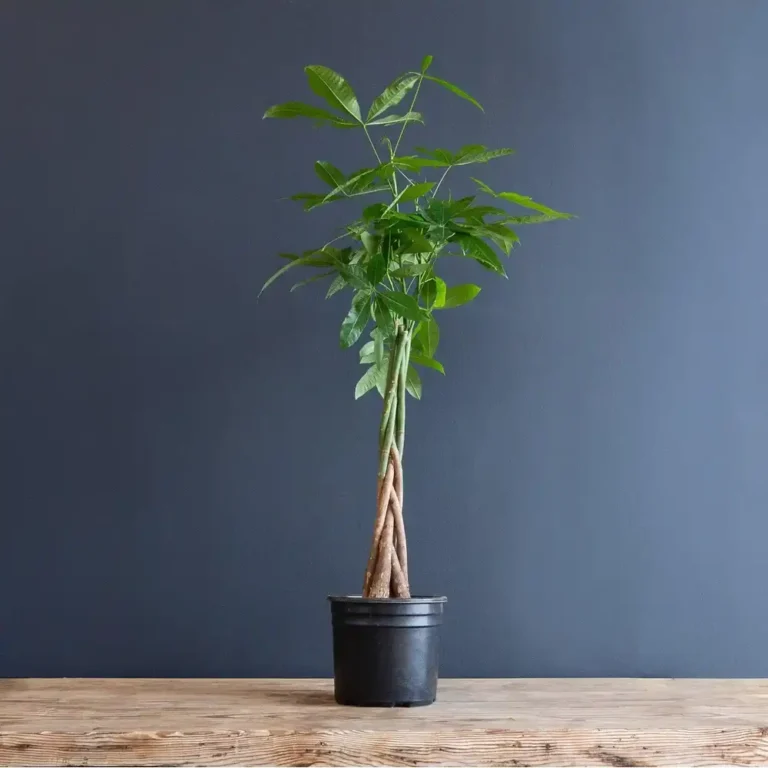
Money Tree (Pachira aquatica) is a popular indoor tree known for its glossy, palm-shaped leaves and the braided trunks commonly sold in U.S. garden centers. Place it in bright indirect light or gentle filtered sun, protect it from harsh afternoon sunlight, and water when the upper layer of potting mix begins to dry. Keep the soil evenly moist but never waterlogged, because standing water can lead to root rot. Money Trees prefer warm indoor temperatures, moderate to higher humidity, and good drainage. With steady light, careful watering, and occasional pruning, they can remain attractive indoor trees for many years.
FAMOUS PLANT
🌿 Glossy Palmate Foliage
☀️ Bright Indirect Light
🪴 Indoor Tree Favorite
🐾 ASPCA Non-Toxic

Care Guide
About Money Tree
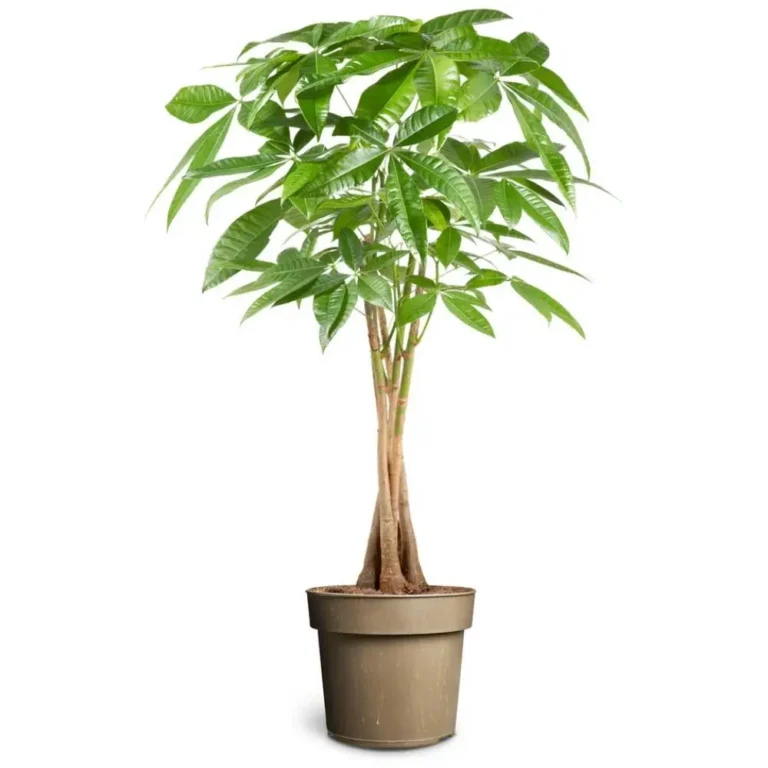
Money Tree (Pachira aquatica) is an evergreen tropical tree in the Malvaceae family. In nature it grows in wet tropical habitats such as freshwater swamps, riverbanks, estuaries, and rainforest areas from Mexico through tropical Central and South America. The species can become a large landscape tree outdoors, but container-grown houseplants are usually kept much smaller.
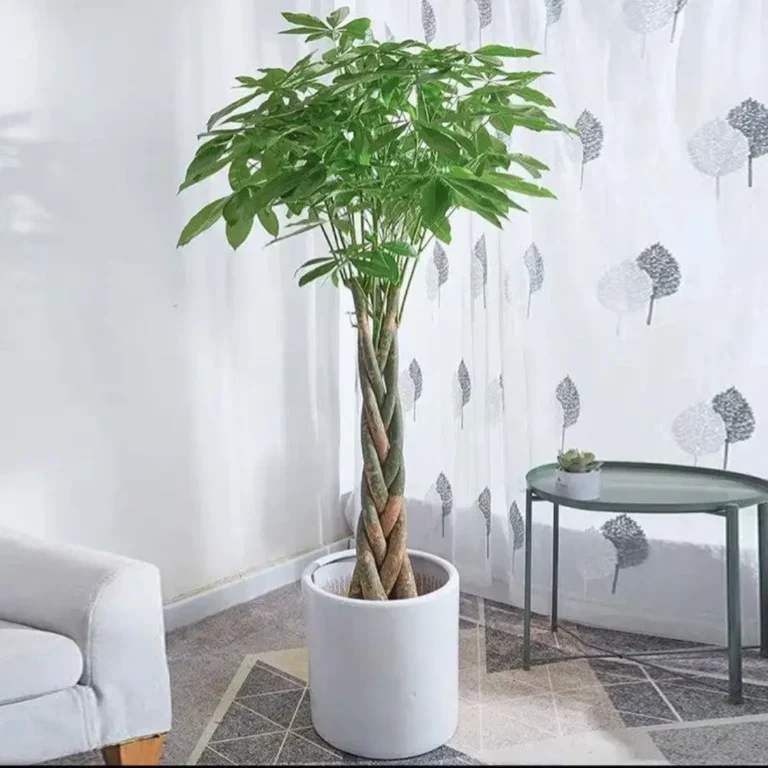
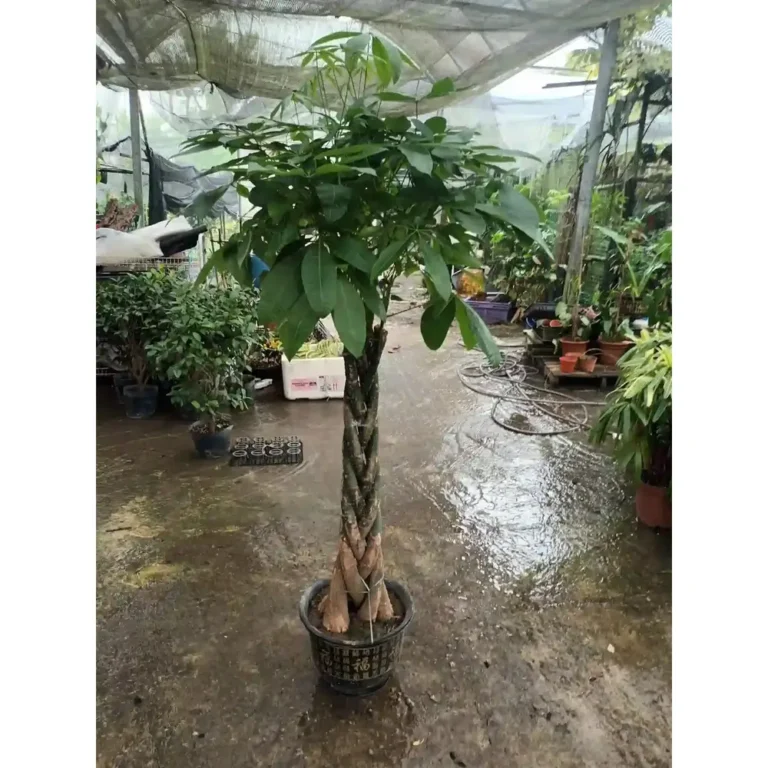
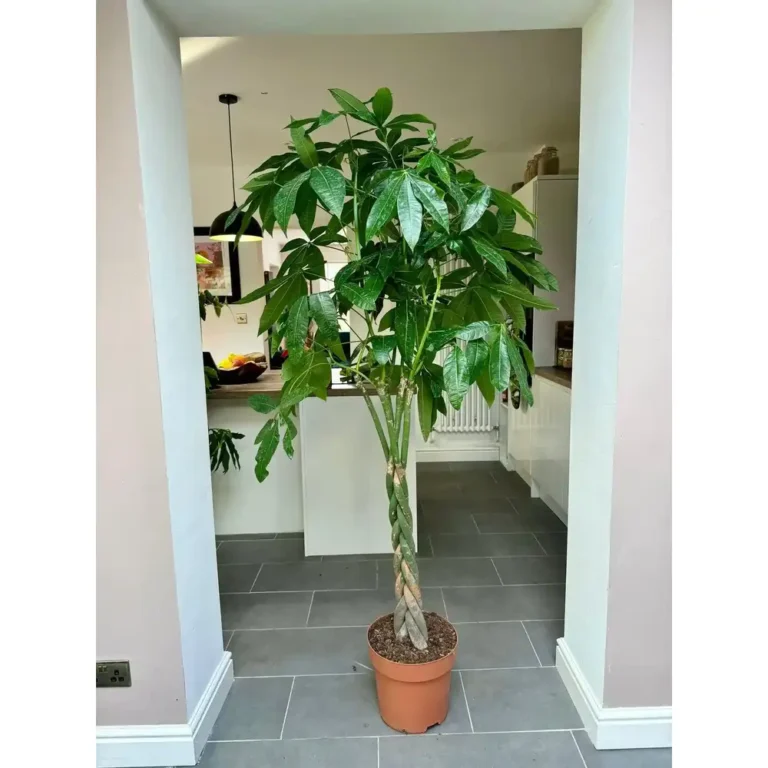
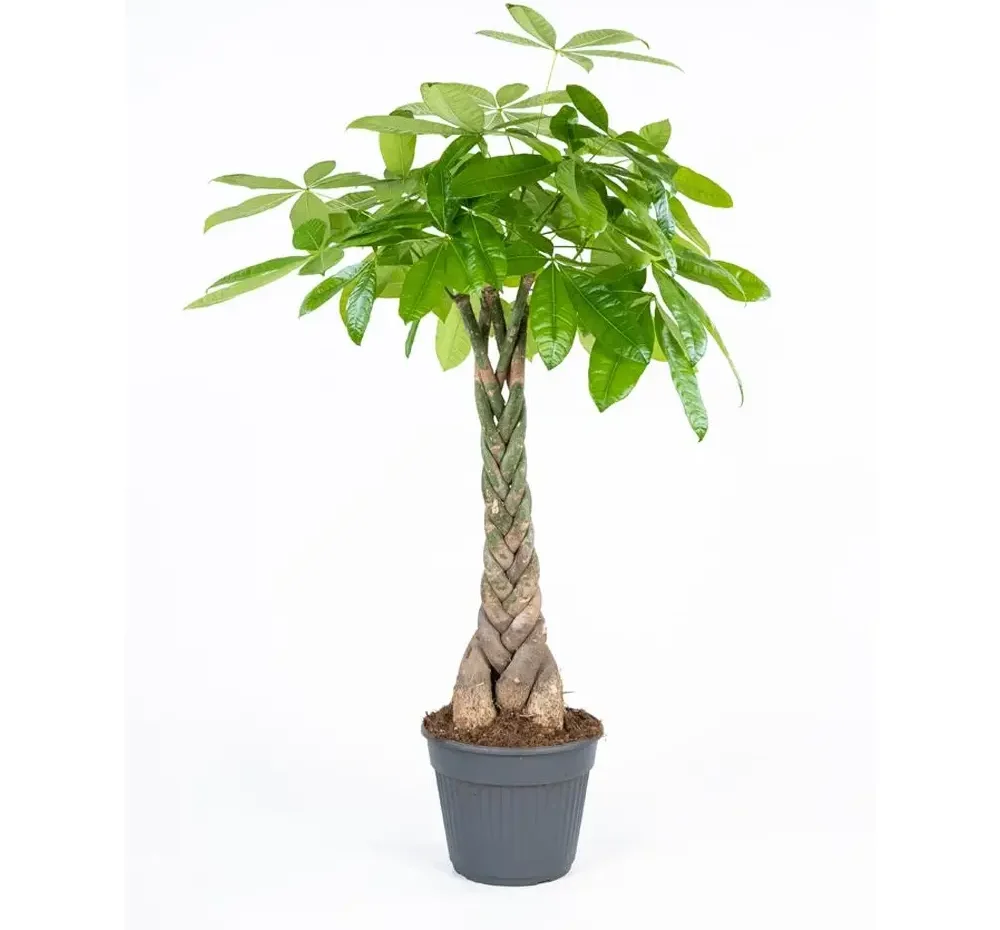
Its leaves are glossy green and palmately compound, typically carrying five to nine elongated leaflets that spread from a central point. The flexible young trunks make it possible for commercial growers to braid several seedlings together, creating the distinctive braided Money Tree commonly sold throughout the United States.
Mature outdoor trees can produce large, fragrant, greenish to yellowish-white flowers with many long stamens, followed by woody seed capsules. Indoor specimens rarely flower. Money Tree is widely used in homes and offices because of its upright form, manageable indoor size, attractive foliage, and association with good fortune and prosperity.
Plant Information
Difficulty
Easy to Moderate
Light
Bright Indirect or Filtered Light
Water
Moist but Well-Drained; Never Soggy
Humidity
Moderate to High Preferred
Temperature
65–75°F Preferred
Growth Rate
Rapid in Good Conditions
Pet Friendly
Yes — ASPCA Non-Toxic
Indoor Height
6–8 ft Typical
Repotting
When Root-Bound or Crowded
Native Range
Mexico to South Tropical America
History of Money Tree
Money Tree has a botanical history extending to the eighteenth century. French botanist Jean Baptiste Christophore Fusée Aublet formally published the species as Pachira aquatica in 1775 in his work on the plants of French Guiana. That name remains accepted today, and the species is classified in the mallow family, Malvaceae.
The plant is native from Mexico through tropical Central and South America, where it naturally grows as a wet-tropical tree along waterways and in swampy or seasonally flooded habitats. Its flexible stems, compound leaves, large flowers, and woody seed capsules are characteristic of the species in the landscape.
The braided Money Tree familiar to modern houseplant buyers is a horticultural presentation rather than the plant’s natural trunk form. The plant became especially popular in Taiwan during the 1980s, where growers braided flexible young stems and marketed the tree in connection with prosperity and positive energy. That presentation later became widely adopted in the international indoor-plant trade.
Today, Money Tree is a common houseplant in the United States and is frequently sold for homes, apartments, offices, and gift giving. Its combination of tropical foliage, compact container growth, braided trunks, and cultural symbolism has made it one of the best-known indoor trees in North American retail horticulture.
Plant Specifications
Botanical Name
Pachira aquatica Aubl.
Family
Malvaceae
Plant Type
Evergreen Tropical Tree
Growth Habit
Erect, Woody, Often Multi-Stemmed
Indoor Height
6–8 ft Typical Indoors
Light Requirement
Bright Indirect or Filtered Light
Watering
Keep Moist but Well-Drained
Humidity
Moderate to High Preferred
Temperature
65–75°F Preferred Indoors
Soil
Moist, Well-Drained Potting Mix
USDA Hardiness
USDA Zones 10–12
Repotting
When Root-Bound; Move Up One Size
Pet Safety
ASPCA Lists as Non-Toxic
Native Range
Mexico to South Tropical America
Money Tree Care Guide
Use these practical Money Tree care guidelines to maintain glossy foliage, healthy roots, a strong trunk, and balanced indoor growth in typical U.S. homes.
Light & Placement
Money Tree prefers bright indirect light or a mix of filtered sun and shade. Strong light supports fuller growth, but harsh direct afternoon sun can scorch the leaves.
Best placement: near an east-facing window, a bright north-facing window, or a few feet back from a sunny south- or west-facing window. Rotate the pot periodically so the canopy develops evenly.
Watering & Drainage
Water when the upper layer of potting mix begins to dry, then water thoroughly until excess moisture drains from the pot. The root zone should stay moderately moist without remaining saturated.
Never leave the container standing in water. Money Tree does not tolerate prolonged waterlogging, and constantly wet soil can cause root rot. Water less often during darker winter conditions when growth slows.
Soil & Repotting
Use a loose, moisture-retentive but well-drained potting mix containing materials such as peat or coco coir with perlite, loam, or coarse components that improve aeration.
Repot when roots become crowded or the plant dries unusually fast. Move up only one reasonable pot size at a time so excess soil does not stay wet around the root ball.
Temperature & Humidity
Money Tree grows best in warm indoor conditions around 65–75°F. Protect it from cold drafts, abrupt temperature changes, and extended exposure below about 45°F.
Moderate to higher humidity is beneficial. During dry U.S. winters, keep the plant away from heating vents and very dry forced-air drafts that can contribute to browning or leaf drop.
Fertilizer
Feed during active spring and summer growth with a balanced indoor-plant fertilizer according to the product label. Money Tree usually needs less fertilizer when growth slows in fall and winter.
Avoid frequent heavy feeding. Excess fertilizer can contribute to salt buildup in container soil and may damage roots or leaf edges.
Pruning & Braided Trunk Care
Prune long or uneven shoots to maintain a compact canopy and encourage branching. Use clean pruning tools and remove dead, damaged, or badly yellowed leaves when necessary.
For braided Money Trees, inspect the trunks periodically and remove any ties or bands that are cutting into expanding stems. The braid is decorative; the plant does not require staking or support when the trunk is stable.
Common Money Tree Problems
Money Tree symptoms can result from watering errors, dry indoor air, temperature stress, light problems, root damage, or pests. Check the full growing environment before making major changes.
Yellow Leaves
Yellow leaves may appear when roots stay too wet, humidity is very low, nutrients are depleted, or the plant is under general stress. Check soil moisture and drainage first, especially if several leaves yellow at once.
Root Rot & Soft Trunk
Standing water and persistently saturated soil can cause root rot. Warning signs include soft or dark roots, foul-smelling soil, declining foliage, or a softening lower trunk. Reduce watering and repot viable roots into fresh, well-drained mix if necessary.
Leaf Drop
Money Tree may drop leaves when the potting mix becomes too dry, after abrupt changes in temperature or light, or during severe root stress. Stabilize the environment and correct moisture problems gradually rather than overwatering in response.
Brown or Scorched Leaves
Brown patches can develop from intense direct sunlight, dry indoor air, cold drafts, or inconsistent watering. Move scorched plants into bright filtered light and keep them away from heating and air-conditioning vents.
Aphids, Mealybugs & Scale
Inspect new growth, stems, and leaf undersides for aphids, white cottony mealybugs, or attached scale insects. Isolate affected plants and treat infestations promptly before pests spread to nearby houseplants.
Fungus Gnats
Fungus gnats are often associated with consistently damp container soil. Adult gnats may hover around the pot while larvae develop in moist organic mix. Allow the upper layer of soil to dry appropriately and avoid keeping the container continually saturated.
How to Choose a Healthy Money Tree
Choose a healthy Money Tree with glossy green leaves, firm stems, a stable trunk, and balanced new growth. Avoid plants with widespread yellowing, extensive leaf drop, large brown patches, soft or blackened trunk tissue, or a canopy that appears severely wilted despite wet soil. A braided trunk should feel firm rather than mushy and should not have tight wires or bands cutting deeply into the bark.
Inspect the potting mix and visible roots before buying. The soil should be moist but not waterlogged, and the container should have functioning drainage holes. Avoid sour-smelling, permanently saturated mix or badly darkened roots that may indicate root rot. Check the undersides of leaves, new shoots, and trunk crevices for aphids, mealybugs, scale insects, sticky residue, fungus gnats, or other signs of pest activity.
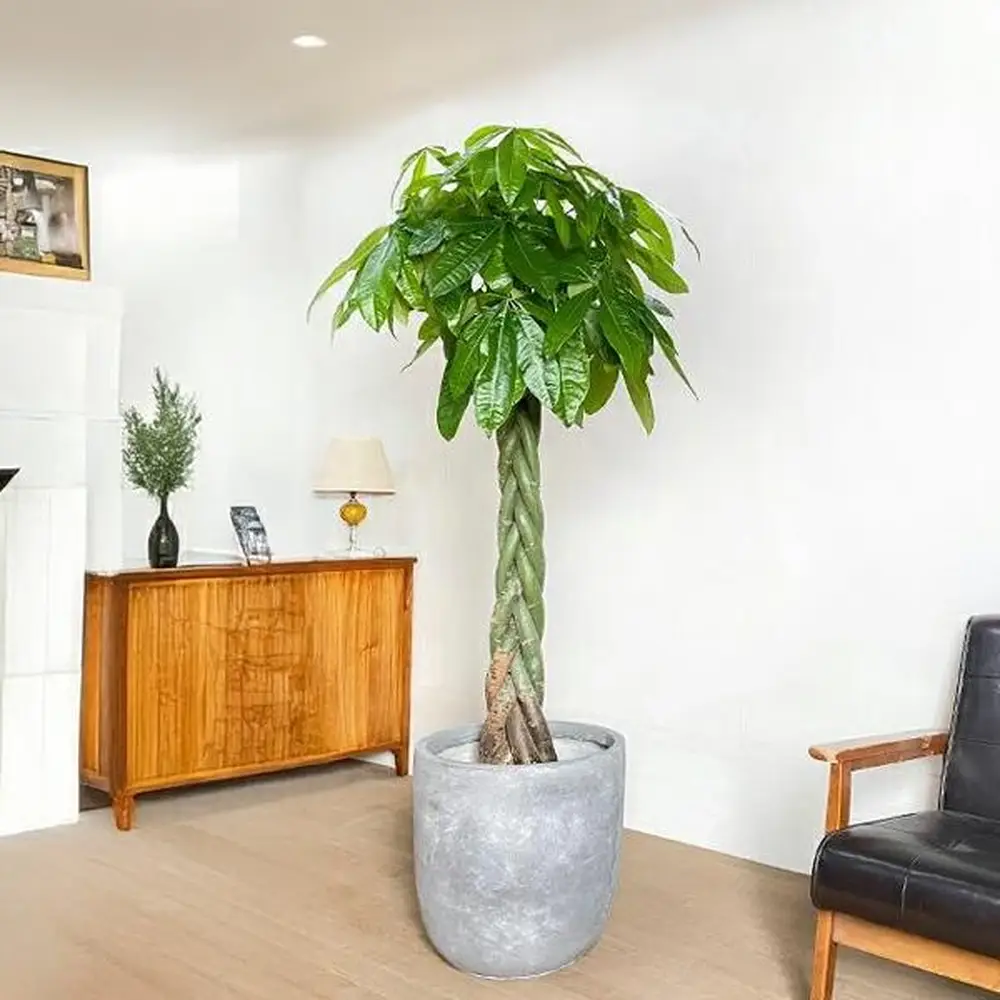
Also consider the plant’s mature indoor size, trunk style, and available light in your home. Money Trees commonly reach about 6–8 feet indoors, although pruning can keep them smaller. Choose a compact plant with strong roots and a healthy canopy rather than selecting only by height or the complexity of the braid.
Buying Checklist
Healthy Foliage
Choose glossy green leaves with active growth and no widespread yellowing, severe spotting, or extensive leaf drop.
Firm Trunk & Roots
Avoid soft trunk tissue, foul-smelling wet soil, blackened roots, or visible decay around the base of the plant.
Good Drainage
Choose a pot with working drainage holes and a well-drained medium that is moist rather than permanently saturated.
No Visible Pests
Inspect new growth, leaf undersides, stems, and trunk crevices for aphids, mealybugs, scale insects, sticky residue, or fungus gnats.
Healthy Braid & Form
If buying a braided Money Tree, make sure the trunks are firm and any ties are not cutting into or constricting the stems.
Frequently Asked Questions
Yes. Money Tree can be a good indoor tree for beginners when it receives bright indirect light, reliable drainage, and consistent watering. The most common mistake is keeping the potting mix continuously waterlogged.
Bright indirect or filtered light is ideal. It can handle a mix of sun and shade, but harsh direct afternoon sun may scorch the foliage. Rotate the pot periodically for more even growth.
Do not water on a fixed schedule. Water when the upper layer of potting mix begins to dry, then water thoroughly and allow all excess moisture to drain. Water less frequently when winter light levels and growth are lower.
The ASPCA lists Pachira aquatica as non-toxic to cats and dogs. Even non-toxic plants can cause stomach upset if a pet eats a large amount, so discourage chewing and contact your veterinarian if concerning symptoms occur.
Money Tree prefers warm indoor temperatures around 65–75°F. Protect it from cold drafts and bring outdoor container plants inside before temperatures fall to about 45°F.
Yes, but year-round outdoor culture is mainly suited to USDA Zones 10–12. In colder parts of the United States, grow it as a houseplant or move containers indoors before cold weather arrives.
Leaf drop can occur when the soil becomes too dry, when roots remain too wet, or after sudden changes in temperature, light, or location. Check soil moisture, drainage, drafts, and recent environmental changes before adjusting care.
Related Plants
Explore Similar Indoor Plants
Ficus
Succulent
Pilea